
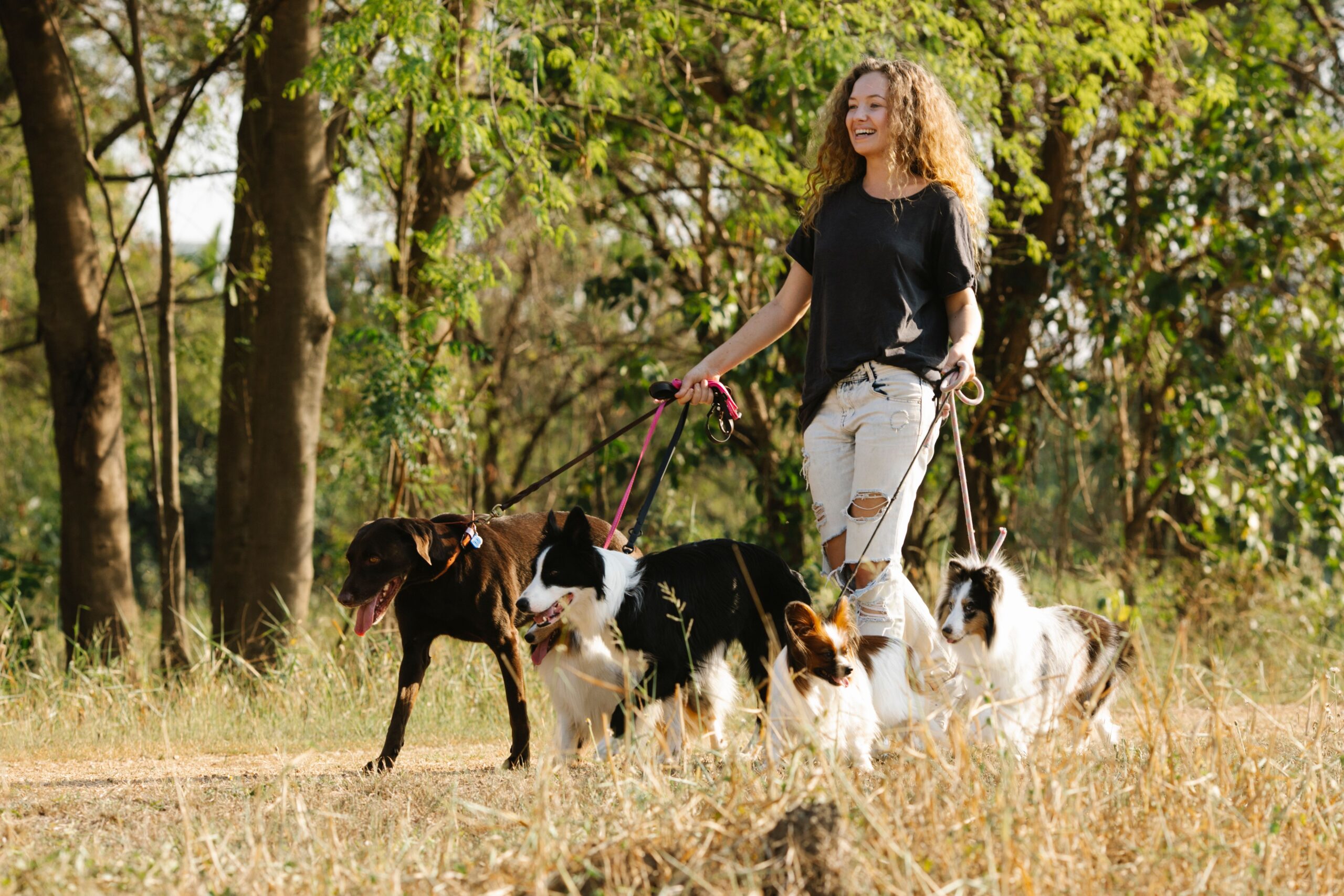
Every NYC dog owner faces the same decision at some point: should your dog walk solo or with a group? The answer depends on your dog’s temperament, health, energy level, and social comfort. Understanding the differences between solo dog walks vs group walks helps you make an informed choice that keeps your dog safe, happy, and well exercised.
Professional dog walking services in Manhattan typically offer a few formats. The two most common are private dog walks, where one walker takes out one dog, and group walks, where multiple dogs walk together. There are also middle ground options like semi private or buddy walks that pair compatible dogs in very small numbers. Each format has distinct advantages and is suited to different types of dogs.
What is a solo dog walk?
A solo dog walk, sometimes called an exclusive or private walk, is a one on one session between a single dog and a professional walker. The walker’s full attention is on that one dog for the entire visit. This format is often recommended for dogs with behavioral concerns, health issues, or special care needs that require closer supervision.
For dogs that are anxious around other animals, reactive on leash, or recovering from an injury, a private walk provides a calm and controlled environment. The walker can adjust the pace, route, and duration to match what the dog can handle. This is especially important in a busy city like New York, where sidewalks, traffic, and unpredictable encounters are part of every outing.
Solo walks also work well for senior dogs that need a slower pace and puppies that are still learning leash manners. A dedicated walker can reinforce basic training cues and keep the session focused. If you are considering one on one walking sessions for your dog, it helps to understand how exclusive walks are structured before committing to a schedule.
What is a group walk?
A group walk involves multiple dogs walking together with a single walker. In some cases, this can mean large pack walks where several dogs are walked simultaneously. However, not all group walks are the same. The quality of a group walk depends heavily on the number of dogs, how they are matched, and the level of supervision provided.
Pack walks can offer social benefits for dogs that enjoy the company of other canines. Dogs are social animals, and walking with compatible companions can provide mental stimulation, play opportunities, and a sense of companionship that solo walks cannot replicate. For confident, well socialized dogs, a group walk can be a highlight of the day. Dogs that enjoy longer social outings may also benefit from extended playgroup sessions that combine walking, park time, and supervised play in small compatible groups.
However, pack walks also carry risks. Large groups can be difficult to control, especially in a dense urban environment. If dogs are not carefully matched for size, energy, and temperament, conflicts can arise. A walker managing too many dogs at once may not be able to give each dog the attention it needs. This is why many professional dog walking services in NYC have moved away from large pack walks in favor of smaller, more controlled formats.
Semi private walks: a middle ground
Between solo walks and large group walks, there is a semi private or buddy walk format. This option pairs a dog with one or two compatible companions, keeping the total number small. Semi private walks offer some of the social benefits of group walking while maintaining a higher level of supervision and individual attention.
Happy Pants offers semi private Buddy Walks that pair dogs with compatible companions from other households. These sessions never exceed three dogs total, and the dogs are carefully matched, introduced, and monitored over time. This approach allows social dogs to enjoy companionship without the risks associated with large pack walks.
For dogs that are social but not suited to large groups, a semi private walk can be an excellent option. It provides a controlled social environment where the walker can still give meaningful attention to each dog.
How to choose the right walk format
Choosing between private dog walks and group walks comes down to understanding your dog’s individual needs. Here are the key factors to consider.
Temperament. A confident, social dog may thrive in a group or semi private setting. A shy, reactive, or anxious dog may do better with the focused attention of a solo walk.
Health and age. Senior dogs, dogs recovering from illness or surgery, and dogs with mobility concerns often benefit from the slower, personalized pace of an exclusive walk. Puppies that are still developing social skills may also need one on one attention before transitioning to group settings. For younger dogs still building confidence, specialized puppy care offers individualized attention with outdoor walks and indoor play.
Energy level. High energy dogs that enjoy play and social interaction may benefit from a longer group outing. These extended visits combine walking, park time, and social play in a structured format with small, compatible groups.
Behavioral concerns. Dogs with leash reactivity, resource guarding, or fear based behaviors need careful handling. A solo walk allows the walker to manage triggers and reinforce positive behavior without the added variable of other dogs.
Schedule and routine. Some owners prefer the consistency of a solo walk because the walker can follow a specific route and routine. Others appreciate the social enrichment that a group walk provides during longer absences.
Safety considerations for both formats
Regardless of which format you choose, safety should always come first. A professional dog walking service should use properly fitted harnesses or collars, carry waste bags, and ensure dogs have current identification tags. Walkers should be trained to handle city distractions, traffic, and unexpected encounters with other animals.
Reputable providers ensure their dog walkers are bonded, insured, and evaluated by management. Clients should receive the same dedicated walker whenever possible, which helps build trust and consistency for the dog. Walkers should also double wrap leashes around their hands for added security and be trained to minimize risks in the city. These practices apply across all walking formats, from solo walks to playgroups.
For owners who travel or work long hours, combining walking with other care services can provide continuity. In home sitting options that include walks, feeding, and companionship can keep your dog’s routine stable even when you cannot be there.
Making the decision
There is no universal answer to the solo dog walks vs group walks question. The best choice depends on your dog’s personality, physical needs, and comfort level with other animals. Some dogs do well with a mix of formats, enjoying a solo walk on some days and a social outing on others.
When evaluating a professional dog walking service, ask how dogs are matched for group walks, what the maximum group size is, and whether the walker is consistent. A service that takes the time to understand your dog and recommends an appropriate format is more likely to provide a positive experience.
Still unsure which walk format suits your dog best? Take a look at the available walking options and find the right fit for your dog’s daily routine.
Frequently Asked Questions
2. Can a shy dog eventually join group walks?
Yes, with proper introductions and gradual socialization, many shy dogs can become comfortable in small, well matched groups over time.
3. Does Happy Pants offer both solo and group walking options?
Yes, the company offers Exclusive Solo Walks and Semi Private Buddy Walks, and never pack walks dogs, keeping group sizes to three or fewer.
4. What if my dog has behavioral issues?
Dogs with behavioral concerns are good candidates for exclusive solo walks, where the walker can provide focused, one on one care.
5. How long are playgroup sessions?
Playgroup sessions last a minimum of 2 hours and 15 minutes and include walking, park time, and social play with no more than four dogs.